
Ringworm From the Gym: How to Stop Catching It in Jiu Jitsu
The second one is the one that tells you something. The first ring on your forearm was bad luck. The second one, four months later, in roughly the same place, after you cleared the first one and went back to training exactly the way you had been, is a pattern.
Most grapplers who catch ringworm from the gym treat it as a skin event. It shows up, it gets treated, it goes away. Then it comes back, training gets interrupted again, and the whole cycle gets filed under the cost of doing this sport. It is not the cost of doing this sport. Dermatophyte fungus survives on shared mats, in damp gear, and in laundry that never ran hot enough to kill it. This is a supply problem, and the supply is usually sitting in your own bag.
Ringworm from the gym is a recurrence problem, not a first-infection problem
Catching it once is close to unavoidable in a contact sport. You train with strangers, on shared mats, in a warm room, with skin that spends an hour under friction. Exposure is the price of admission.
Catching it three times in a year is a different problem, and it has a different cause. Ringworm is caused by dermatophyte fungi, and the mat-acquired version has its own name in the literature: tinea gladiatorum. A systematic review and meta-analysis in Current Microbiology found Trichophyton tonsurans responsible for 92 percent of cases in wrestlers, and measured dermatophyte contamination in wrestling halls at an overall prevalence of five percent, running as high as 56 percent in individual facilities.
Those fungi do not need a contagious training partner every time. They persist on surfaces. The athlete who cleared an infection and changed nothing about his gear, his bag, or his laundry has a decent chance of reinfecting himself from his own equipment.
Three routes carry the dermatophyte back to you: the mat you train on, the bag you carry, and the wash cycle you run. Close all three and the recurrence stops. That is the prevention half of how to stop catching ringworm in jiu jitsu. The treatment half belongs to a doctor, and this article does not go there.

What happens when you treat ringworm as a skin problem and not a gym problem
Here is the loop that keeps ringworm from the gym in circulation, and most grapplers live some version of it. A ring appears. You see a doctor or reach for something at the pharmacy. It clears. You go back to training. You wear the same rashguard out of the same bag, which has been zipped shut in a car trunk for two weeks. Somewhere in the next month, a new lesion opens up.
The reason this is hard to spot is timing. Tinea corporis has an incubation period of roughly one to three weeks. By the time you see a ring, the exposure that caused it is two Tuesdays ago. You cannot reverse-engineer the source from memory, so you stop trying, and the actual cause stays in the rotation untouched.
The cost is measured on the training calendar. Sitting out three weeks in the middle of a comp prep block costs more than the three weeks. It costs the peak you were building toward. And there is the quieter version: partners who start choosing someone else to drill with, and who are right to.

How long ringworm survives on contaminated surfaces like mats, gear, and laundry
This is the fact the whole problem turns on, and it is the one almost nobody tells an athlete trying to work out how to prevent ringworm in jiu jitsu.
Dermatophytes shed from skin as arthrospores, and arthrospores are durable. Research on Trichophyton mentagrophytes published in Applied and Environmental Microbiology found that arthrospores are highly resistant to chilling and freezing, and extremely susceptible to moderate heat above 50 degrees Celsius and to drying out. Under dry conditions, they can stay viable for months.
That is the entire protocol, sitting in two findings. Cold does not kill it. Heat and dryness do.
That single fact reorders the priority list. Your laundry cycle matters more than your mat wipe-down, because a cold wash is not a wash as far as this organism is concerned. The three routes below run in that order.

The laundry cycle you run for gym clothes
Highest return, least attention. Guidance from the New Jersey Department of Health for skin infections in contact sports is specific: wash workout clothing after each practice using hot water, and dry on a high heat setting. The CDC gives the same instruction for clothing and towels, recommending high heat where the fabric allows.
Practically, for a grappler: the gi and the rashguard get washed after every session at the academy, not after every third. Hot water where the garment tolerates it, and the dryer doing real work rather than a delicate tumble. Training gear gets washed separately from household laundry, and moisture-wicking fabric helps by keeping skin drier between sessions. A cold, crowded, once-a-week load is where reinfection lives.

The bag you carry
A zipped gym bag is warm, dark, and damp, and it holds a worn rashguard against a clean one for two days. Unpack it the day you get home. Every time. What is in the bag stays yours, too: towels and razors are not loaner items, whatever the room culture says. The bag itself gets emptied and left open to dry out, and it gets wiped down periodically like any other surface that touches your skin.
Rotate enough gear that you are never reaching for something that has been worn and not washed. Two rashguards is not enough for four sessions a week. Knee sleeves, mouthguard case, and belt go in the rotation too, because they are all fabric or plastic that has been against skin.
The mat you train on
You control less here, but not nothing. Do a ten-second skin check before class rather than in the shower afterward. Cover broken skin before you step on. Wear sandals in the locker room and the shower instead of going barefoot, and put your own towel down before you sit on a shared bench. And if you have an active lesion, you do not train. CDC guidance on ringworm tells anyone with a known or suspected infection to avoid skin-to-skin contact, and that applies to you as the source, not only as the target.
Knowing what you are looking at is its own skill, and ringworm is one of three things a grappler is likely to find. The differences between ringworm, staph, and MRSA on the mat are worth learning before you need them.
Where a post-training wash fits in a routine to prevent ringworm

Every public health source on how to prevent ringworm in contact sports lists the same step first, and it is the one you fully control: shower promptly after class. The CDC recommends athletes shower right after practice and keep gear clean. The New Jersey guidance adds a detail worth noticing: use liquid soap rather than a shared bar.
What you shower with is a real decision inside that step, and it is worth being precise about what a soap does. No body wash treats, cures, or prevents a fungal infection. Any product marketed to grapplers that suggests otherwise is overstating what a rinse-off cleanser can do.
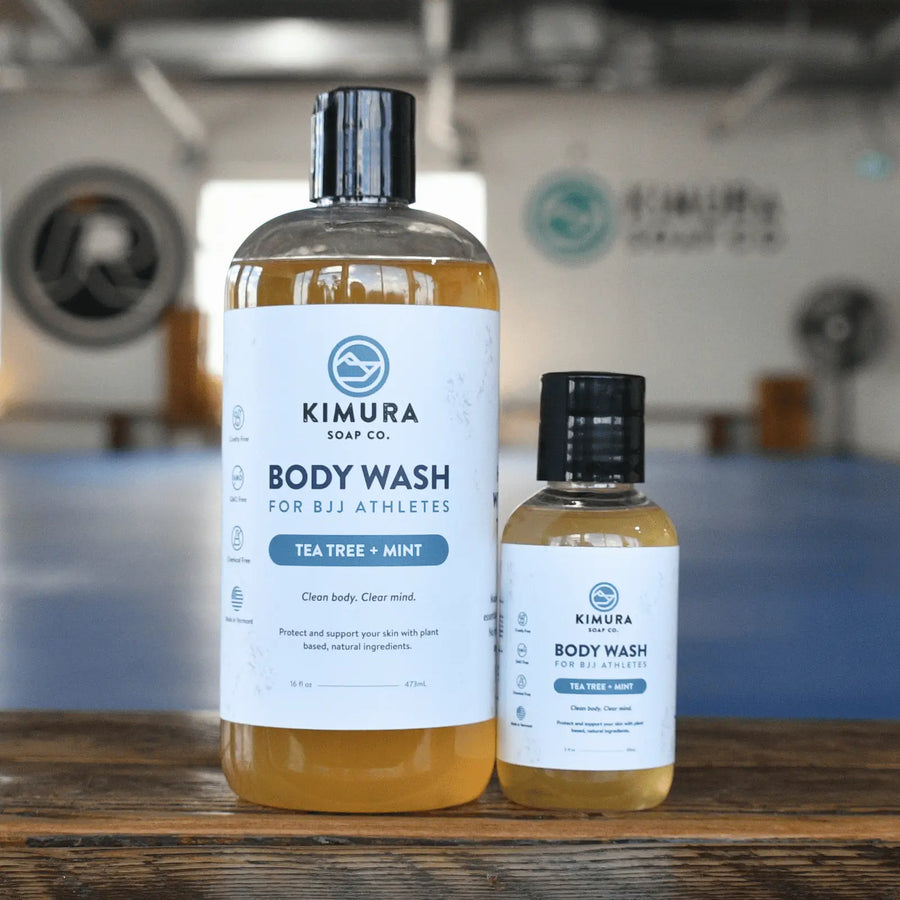
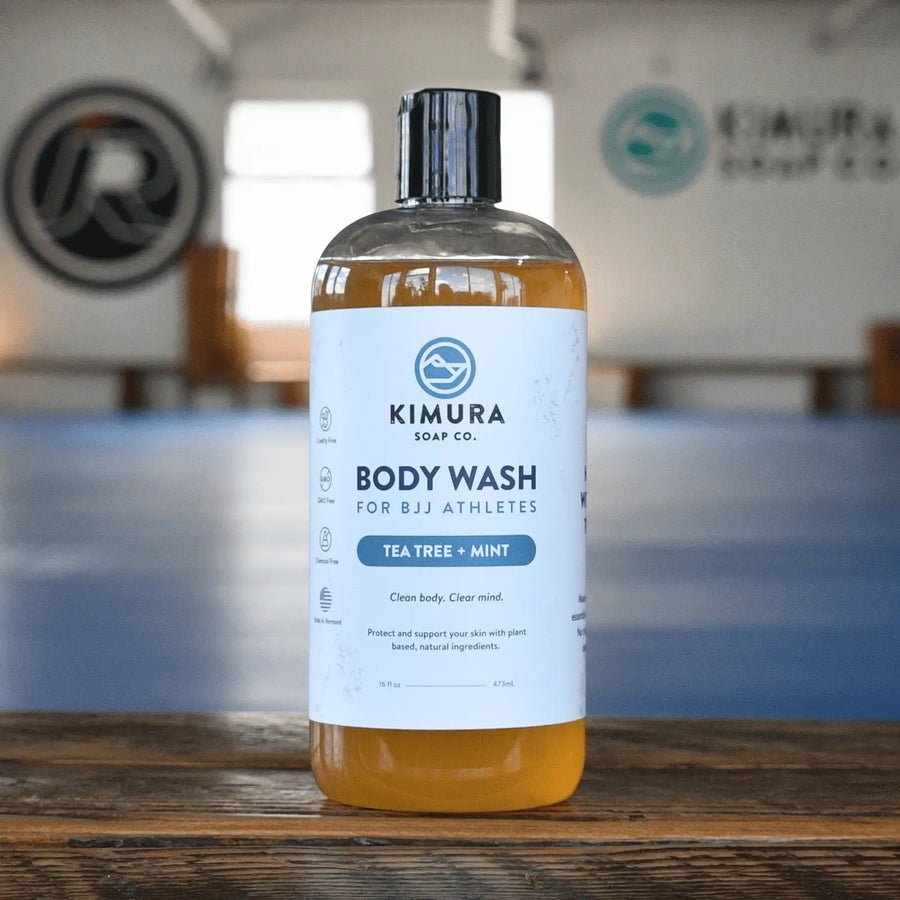
Kimura is built to be the deliberate version of that step. It is a plant-based body wash made in Vermont in small batches and certified to USDA Organic Standards by Vermont Organic Farmers. The full ingredient list is printed on the bottle: organic saponified oils (coconut, olive, and jojoba), vegetable glycerin, organic guar gum, peppermint essential oil, cornmint essential oil, tea tree essential oil, cedarwood essential oil, lavandin grosso essential oil, orange essential oil, rosemary extract, and organic aloe vera. Tea tree is the functional anchor of the blend, and the research behind that ingredient, along with the limits of what it supports, is covered in detail in why tea tree oil belongs in a BJJ soap.
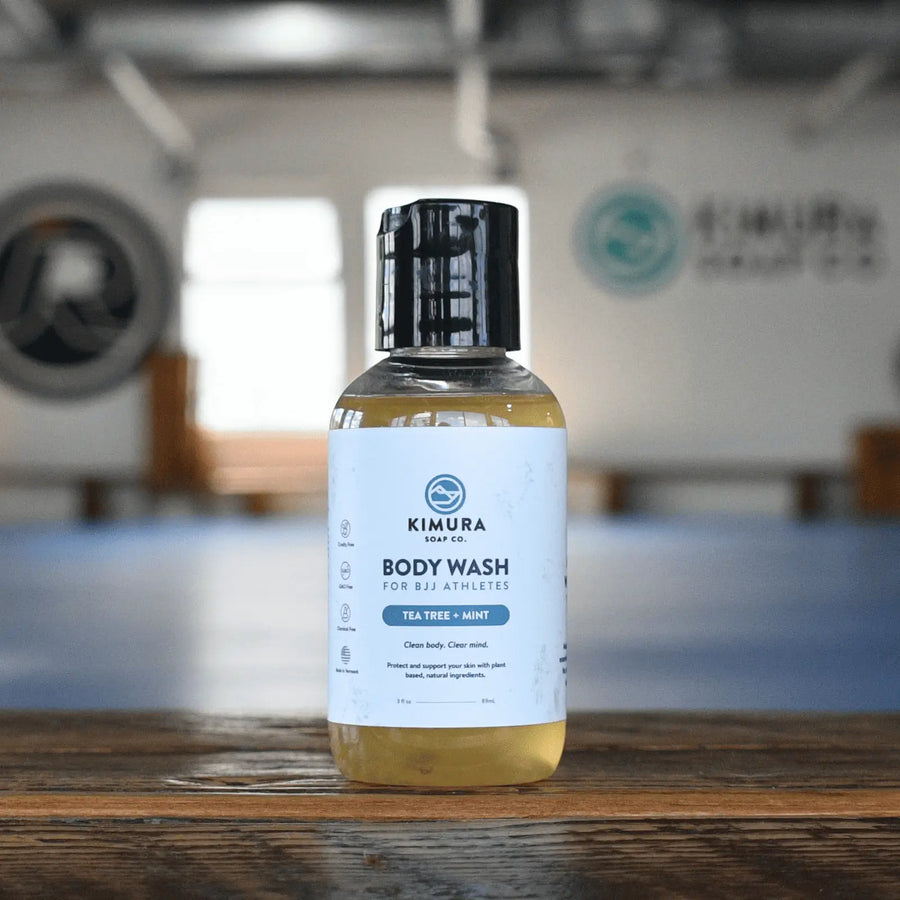
The soap belongs in this conversation for one reason: adherence. The shower only works if it happens after every session, including the late class you got home from at ten. A 3 oz bottle in the bag makes that likelier than a dispenser you do not trust.

The part you do not control: your academy's mat protocol
You can run a flawless laundry cycle and still train on a mat carrying live tinea. Those wrestling-hall contamination figures cited earlier were measured on facilities, not on athletes, and a mat that tests positive is the part of this problem no individual can fix alone.
What to ask your gym
Ask four things, and ask them like a customer rather than an inspector. How often do the mats get cleaned. What product is used, and does it reach the wall pads and shared gear as well as the mat. Do the mats get done between classes or once after the last session of the night. Who is actually responsible for it.
The answers tell you what you need to know. An effective protocol removes debris first, then cleans, then applies a disinfectant at the manufacturer's stated contact time. The CDC notes that diluted chlorine bleach at a quarter cup per gallon of water, or strong detergents, will kill the fungus that causes ringworm, and that cleaning products should never be mixed. A gym that can answer is paying attention. A gym that cannot is information you can act on, especially if you drop in across three academies and none of the protocols are yours.
Coming back after it clears
Whether a lesion has actually resolved is a call for a doctor, not for you and not for your coach. Get it looked at, follow what you are told, and do not self-certify.
What is yours to handle is the disclosure. Tell your training partners and tell your coach. High school wrestling has this written into the rulebook: NFHS rules require a referee to perform skin checks before a dual meet, require written clearance from a health-care professional for any suspected condition, and state plainly that covering a communicable condition is not acceptable. Jiu jitsu mostly runs on the honor system instead, which means the standard in your room is whatever the people in it decide to hold.
What changes when the bag and the laundry stop reinfecting you
The rounds do not change. The mats do not change. Preventing ringworm was never going to come from training less. What changes is that the recurrence stops, because the reservoir you were carrying between the academy and your laundry room is gone.
In practice that looks like this. Gear gets unpacked the same day and washed hot. Two clean rashguards are always available. The 3 oz bottle lives in the bag, so the post-class shower happens whether you are home or at a hotel before a tournament. The skin check becomes a habit you do standing at your bag instead of a reaction to something already spreading across your ribs.
Training blocks stop getting cut in half. That is the whole return.
The new standard for gym hygiene: treat the bag like the mat
Grapplers already accept that mats get disinfected and mouthguards get cleaned. Nobody argues about it. The gear bag and the laundry basket are the two places that standard has not reached yet, and they are the two places the organism is most likely to be waiting, because both are dark, damp, and rarely run above 50 degrees.
Nobody stops catching ringworm through willpower. It is a protocol gap, not a character flaw, and the protocol is three steps long: wash hot, unpack daily, shower immediately. Which of those three have you actually been doing all year, and which have you been meaning to start since the last ring showed up on your forearm?
Stopping ringworm from the gym comes down to closing that gap and keeping it closed for the rest of your jiu jitsu career. Put a bottle in the bag and make the post-training shower the step that never gets skipped. Clean body. Clear mind.
Frequently asked questions about ringworm from the gym
How long does ringworm survive on gym equipment and other contaminated surfaces?
Longer than most people assume. Dermatophyte arthrospores stay viable for months on dry surfaces, and the research above found they resist chilling and freezing while dying off above 50 degrees Celsius. Fungi thrive in the warm, damp conditions a mat room and a zipped gym bag both provide, which is why contaminated surfaces stay infectious between sessions.
Can you get ringworm from gym clothes that have already been washed?
Yes, if the wash ran cold. Cold water does not kill dermatophytes, so sweaty clothes can come out of a cycle still carrying spores. Both CDC guidance and state contact-sport guidance call for hot water and a high heat setting in the dryer. Wash training gear separately from household laundry rather than adding it to a mixed load.
Do shower shoes prevent ringworm and athlete's foot in locker rooms and showers?
They close a real exposure route. Athlete's foot is tinea pedis, the same family of fungus behind ringworm, and it spreads on wet locker room floors. The CDC recommends sandals or flip flops in public showers and locker rooms instead of walking barefoot. It is the cheapest habit to add to a gym routine.
How do I avoid catching ringworm from other gym goers and communal equipment?
In grappling, direct skin contact is the main route, so the habits that matter most are skin checks and staying off the mat with an active infection. Past that: keep personal items personal, never share towels or razors, put your own towel down on locker room benches, and disinfect equipment or shared gear after someone else has used it.
Does antibacterial soap prevent ringworm?
No. Ringworm is a fungal infection, and antibacterial soap is formulated against bacteria. The FDA restricted triclosan in consumer wash products back in 2016, and no rinse-off wash of any kind treats or prevents a fungal infection. What a wash does is clean skin promptly after training, when the barrier is at its most compromised. That is the variable you actually control.
Can I train with an active ringworm infection if I keep it covered?
No. Ringworm is highly contagious and spreads easily through direct contact, which is most of what jiu jitsu is. NFHS wrestling rules state plainly that covering a communicable condition is not acceptable, and jiu jitsu has no reason to hold itself to a lower standard. Whether it has cleared is a call for a doctor.
Keep the 3 oz travel bottle in your gym bag or start with the 16+3 combo.